Workbench
Workbench 0.3.0
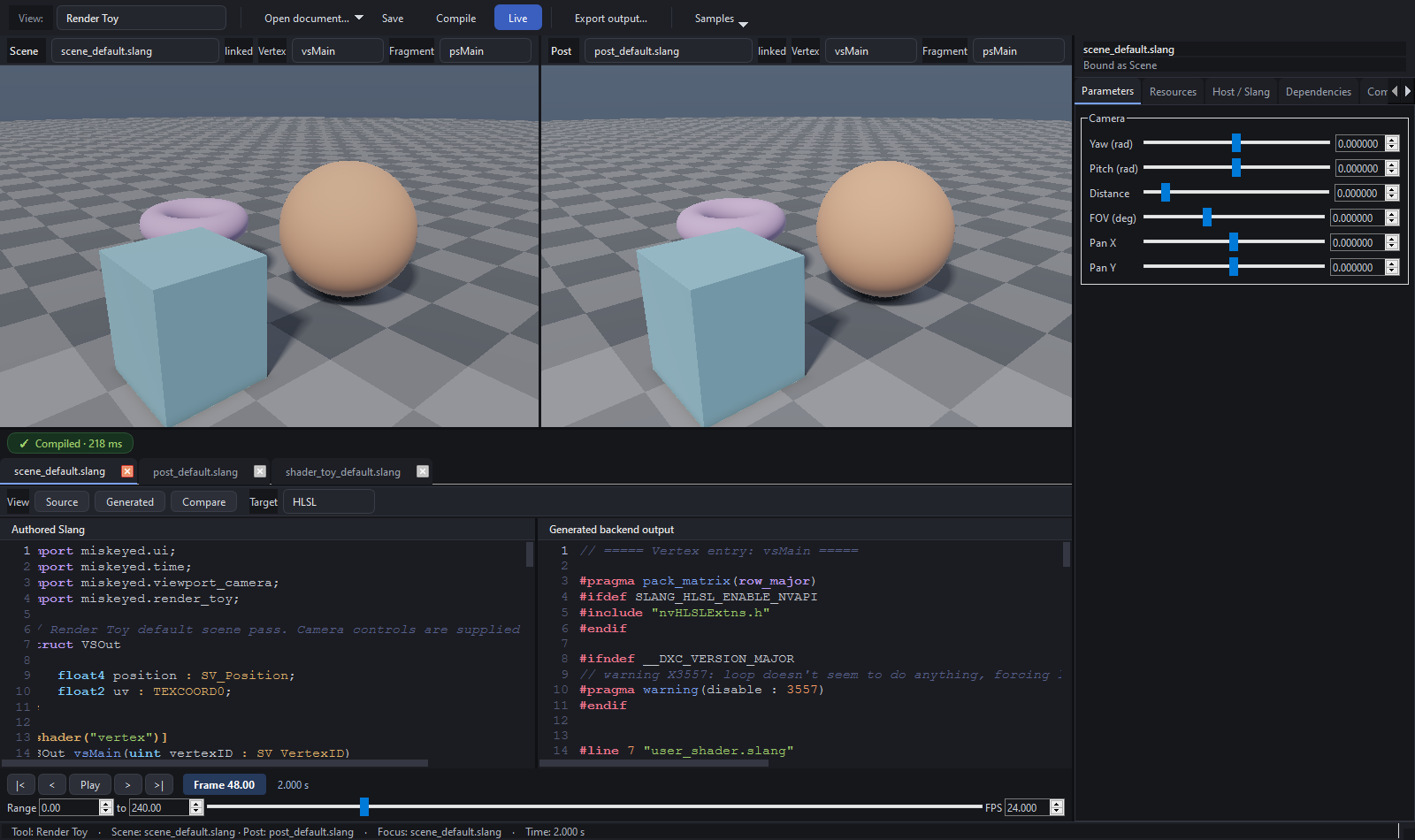
Workbench is a native technical-art application for editing Slang, inspecting what the compiler understood, and seeing the result through Qt’s QRhi rendering layer. The documentation starts with visible tasks, then develops the mental model, then opens the implementation and extension boundaries.
Choose a path
- Learn
Start Workbench without installing a development environment, edit a first shader, and learn the visible vocabulary. Begin with Learn Workbench.
- Use
Follow short tasks for the workspace, Inspector, timeline, tools, and generated code. Go to Using Workbench.
- Understand
Build mental models for documents and bindings, entry points, reflection, dependency identity, time, and tool sessions. Go to Concepts.
- Extend
Author against the packaged Slang modules or add a tool through the native and Python exposure boundaries. Start at Workbench Slang or Extending Workbench.
Progressive depth
use the product -> learn the concepts -> study architecture -> extend -> reference
Learn
Using Workbench
Concepts
Workbench Slang
Architecture
Extending Workbench
Reference